
How to Get Your Business Recommended by ChatGPT
Learn how to improve your business's visibility in ChatGPT through entity SEO, authoritative content, technical SEO and credible brand mentions.
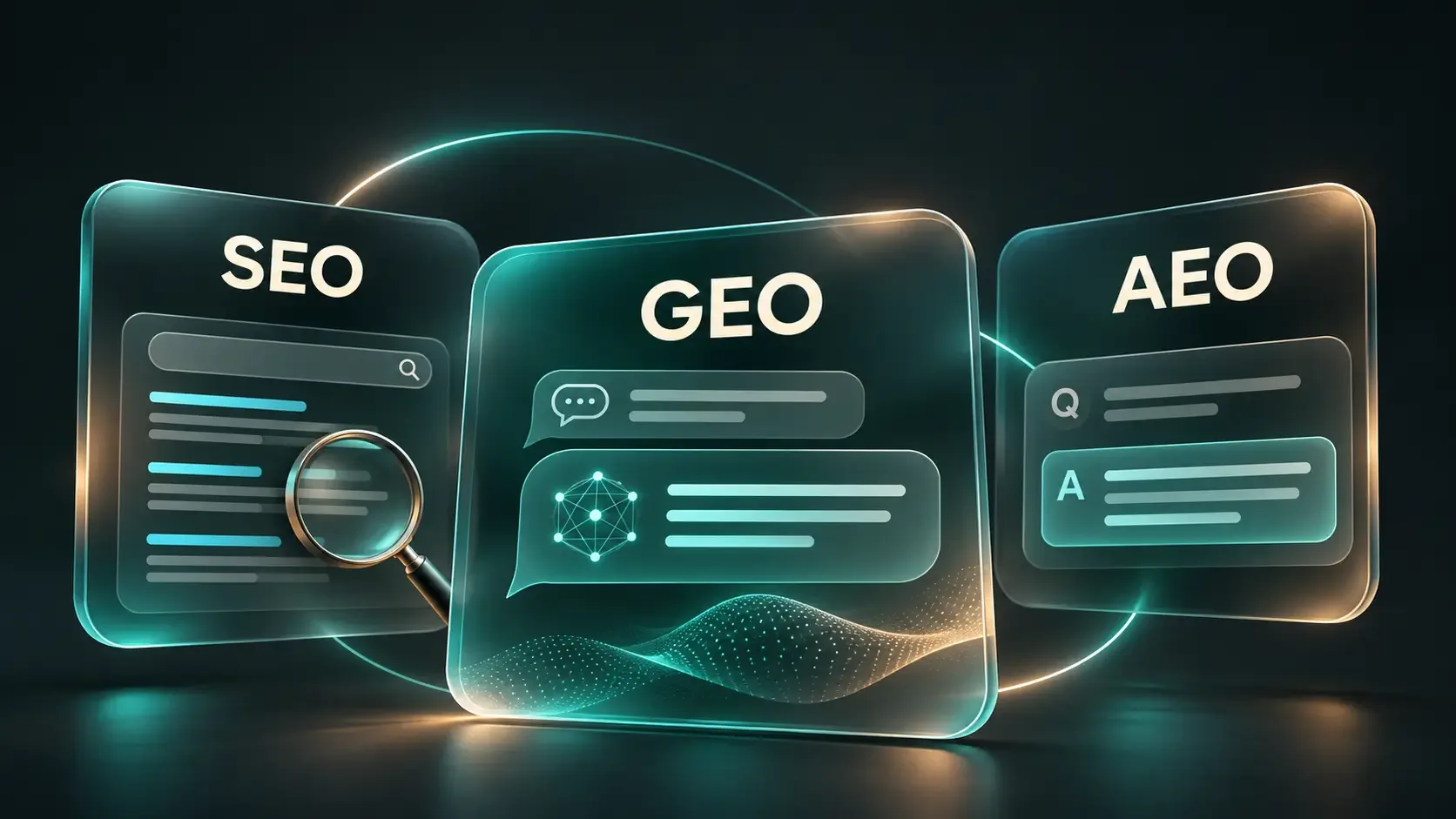
The way people search for information, products and services is changing. While Google remains an important discovery channel, platforms such as ChatGPT, Gemini and AI Overivews, are creating new opportunities for businesses to reach potential customers.
With this evolution comes a growing list of acronyms. Search Engine Optimisation (SEO), Generative Engine Optimisation (GEO) and Answer Engine Optimisation (AEO) are now frequently discussed, but what do they actually mean for your business?
Having specialised in SEO since 2006, my view is that these disciplines should complement one another rather than compete for your marketing budget.
Let's explore their differences and how they can work together.
SEO | GEO | AEO | |
|---|---|---|---|
Full Name | Search Engine Optimisation | Generative Engine Optimisation | Answer Engine Optimisation |
Primary Objective | Organic search visibility | Visibility in AI-generated responses | Providing direct answers to questions |
Examples | Google and Bing organic results | ChatGPT, Gemini and Claude | Featured snippets and conversational answers |
Key Considerations | Relevance, content, technical SEO, authority and trust | Entity clarity, discoverability and credible sources | Accurate, concise and well-structured answers |
Success Metrics | Impressions, traffic, engagement and conversions | Brand mentions, recommendations and citations | Answer visibility, citations and engagement |
Although each discipline has a different emphasis, there is considerable overlap between them.
Search Engine Optimisation is the process of improving a website's visibility within organic search results to attract relevant visitors and generate business enquiries or sales.
An effective SEO strategy typically encompasses:
Technical SEO and website accessibility.
Keyword and search intent research.
Content creation and optimisation.
Website architecture and internal linking.
Backlinks and digital authority.
User experience and conversion optimisation.
Local search optimisation, where relevant.
For example, someone searching Google for "accountants in Norwich" may encounter local business listings and organic search results. Traditional SEO helps an accountancy firm compete for visibility within those results.
However, appearing prominently in search results is only part of the objective. The ultimate goal is to connect your business with potential customers and encourage them to take meaningful action.
You can learn more about my approach through my Google SEO services.
Generative Engine Optimisation is the process of improving how a business and its content are discovered, understood and referenced within AI-generated responses.
Rather than presenting users with a conventional list of links, generative search platforms can synthesise information from multiple sources to produce a conversational answer.
For example, a potential customer might ask ChatGPT:
Can you recommend some reputable accountancy firms in Norwich that specialise in helping small businesses?
The response may include a selection of businesses, explanations of their services and links to supporting sources.
From a business perspective, GEO focuses on improving opportunities to be:
Mentioned within AI-generated responses.
Recommended to potential customers.
Cited as a credible informational source.
Accurately represented across AI platforms.
An effective GEO strategy can include technical SEO, entity optimisation, authoritative content, consistent brand information and credible third-party references.
Unlike traditional keyword rankings, AI-generated responses can vary according to the platform, prompt, location and other contextual factors.
This makes GEO as much about building a recognisable and trusted online brand and presence as it is about optimising individual pages.
Answer Engine Optimisation focuses on making information easier for search engines and AI platforms to retrieve and present as direct answers to users' questions.
For example, someone might search for:
What expenses can a self-employed person claim in the UK?
Rather than visiting several websites to find the answer, they may encounter a featured snippet, AI Overview or conversational response.
AEO involves creating content that answers such questions accurately, clearly and comprehensively.
Common approaches include:
Using descriptive headings that reflect customer questions.
Providing direct answers before expanding on the detail.
Structuring information using lists, tables and step-by-step instructions where appropriate.
Supporting claims with reliable sources.
Demonstrating relevant experience and expertise.
Implementing appropriate structured data.
However, AEO is not simply about publishing hundreds of frequently asked questions. The content must provide genuine value and adequately address the user's information needs.
The fundamental difference between SEO and GEO is the type of search experience in which you are trying to increase visibility.
SEO primarily focuses on organic search results, while GEO focuses on inclusion within generative responses.
Consider the following searches:
Traditional search query | Generative search prompt |
|---|---|
SEO consultant Norfolk | Can you recommend an experienced independent SEO consultant in Norfolk? |
Best golf courses Costa del Sol | Which golf courses near Málaga would you recommend for a group of intermediate golfers? |
CFD consultancy UK | Which UK engineering consultancies specialise in CFD modelling for data centres? |
Generative search allows users to provide more context about their requirements and ask follow-up questions.
For businesses, this creates opportunities to be discovered based on specific expertise, services, locations and customer requirements rather than individual keywords alone.
It reinforces the importance of clearly communicating what your business does, who it serves and what distinguishes it from competitors.
AEO is primarily concerned with answering questions, whereas GEO is concerned with how businesses and information are represented within generative responses.
For example:
AEO-focused question:
What is a website migration?
GEO-focused question:
Can you recommend an experienced SEO consultant who can help my business migrate its website without losing organic traffic?
The first question requires an accurate explanation. The second requires the platform to identify and potentially recommend suitable service providers.
A business could appear as a source for the first answer without necessarily being recommended in the second.
That said, publishing genuinely helpful educational content can support both objectives by demonstrating knowledge and expertise within your industry.
Despite the different terminology, all three disciplines share many of the same foundations.
Your website should be accessible to relevant search engines and AI search crawlers. Important content should be easy to discover, with unnecessary technical barriers removed.
Content should address genuine customer questions, demonstrate expertise and provide accurate, useful information.
Publishing original research, practical guides, case studies and industry insights can help distinguish your business from competitors.
Search engines and AI platforms need to understand who you are, what your business does and how it relates to other organisations, topics and locations.
Consistent business information, clear service descriptions, credible author profiles and appropriate structured data can help establish that understanding.
Demonstrating genuine experience and expertise is important across all forms of search.
This may include professional qualifications, client case studies, industry memberships, customer reviews and evidence of successful work.
You can read more about this in my guide to E-E-A-T and its role in SEO.
A business's reputation extends beyond its own website.
Mentions within industry publications, professional directories, independent reviews and other credible websites can contribute to a stronger digital presence.
I explore this relationship further in Brand Is the New Backlink: The Future of SEO in the AI Era.
Let's imagine a business that specialises in commercial solar panel installations.
An integrated strategy could include:
Discipline | Example activity |
|---|---|
SEO | Optimising service pages for commercial solar panel installation searches. |
GEO | Strengthening brand recognition and publishing case studies demonstrating commercial installation expertise. |
AEO | Creating guides answering questions about installation costs, planning permission and energy savings. |
Rather than creating three completely separate marketing campaigns, the business can develop a coordinated strategy that supports visibility across several search experiences.
A detailed, authoritative guide could attract organic search traffic, provide answers to customer questions and become a potential reference for AI-generated responses.
This is also a central principle behind Search Everywhere Optimisation, which considers how businesses are discovered across multiple digital platforms.
No. Traditional SEO remains an essential foundation for AI search visibility.
Businesses should continue investing in technical SEO, relevant content, website usability, internal linking and digital authority while addressing the additional opportunities created by generative search.
In my experience, many businesses still have significant opportunities to improve their existing organic search performance. Diverting the majority of their SEO budget towards AI visibility before addressing those fundamentals may not be the most effective use of their resources.
The emergence of AI search changes how people discover businesses, but it does not eliminate the need for a technically sound website, useful information and a credible online reputation.
Traditional keyword rankings alone provide an increasingly incomplete picture of search performance.
I prefer to assess performance across three core areas: Visibility, Engagement and Conversions (VEC).
Area | Example metrics |
|---|---|
Visibility | Organic impressions, AI brand mentions, branded impressions and clicks, recommendations, citations and competitor visibility. |
Engagement | Website visits, engaged sessions, branded searches and content interactions. |
Conversions | Enquiries, telephone calls, purchases and other valuable business actions. |
It's also important to recognise that a customer who discovers your business through ChatGPT may subsequently search for your brand on Google rather than clicking a link within the AI response.
Consequently, relying exclusively on direct referral traffic from AI platforms could overlook some of their contribution to the customer journey.
I discuss the changing relationship between search visibility and website traffic in my analysis of DataForSEO's Search Insider 2026 report.
The right balance between SEO, GEO and AEO depends on your industry, audience, competitive landscape and existing online visibility.
For most businesses, I would recommend starting with the following:
Establish strong technical SEO foundations.
Optimise key commercial pages around genuine customer search intent.
Publish helpful content that demonstrates your industry expertise.
Strengthen brand consistency and entity recognition.
Build a credible presence across relevant third-party websites.
Monitor organic and AI search visibility.
Refine your strategy based on engagement and business outcomes.
The objective is not to optimise for every emerging search platform at the expense of established channels. It is to build a sustainable strategy that helps your business get discovered wherever prospective customers are searching.
SEO, GEO and AEO are not competing disciplines. They represent different aspects of an evolving search landscape.
Businesses that invest in strong technical foundations, authoritative content, brand recognition and genuine customer value are building a foundation for visibility across both traditional and AI-powered search experiences.
The technology may change, but the underlying business objective remains the same: get found by the right people and convert that visibility into meaningful business results.
If you would like to understand how your business currently performs across traditional and AI-powered search, explore my AI SEO and generative engine optimisation services or get in touch for a free consultation.
SEO focuses on organic search visibility, GEO focuses on visibility within AI-generated responses, and AEO focuses on providing direct answers to user questions.
AI SEO is a broader term that can encompass GEO, AEO, entity SEO and other activities designed to improve visibility across AI-powered search experiences.
Yes. Well-researched, accessible and authoritative content that addresses genuine user needs can support all three disciplines.
Small businesses can benefit from GEO, particularly where potential customers use AI platforms to discover or compare service providers. However, investment should be proportionate to the opportunity and should not come at the expense of essential SEO work.

Learn how to improve your business's visibility in ChatGPT through entity SEO, authoritative content, technical SEO and credible brand mentions.
Search itself is not being reinvented overnight. Search results are. That is the clearest message from DataForSEO's Search Insider: 2026 Edition.
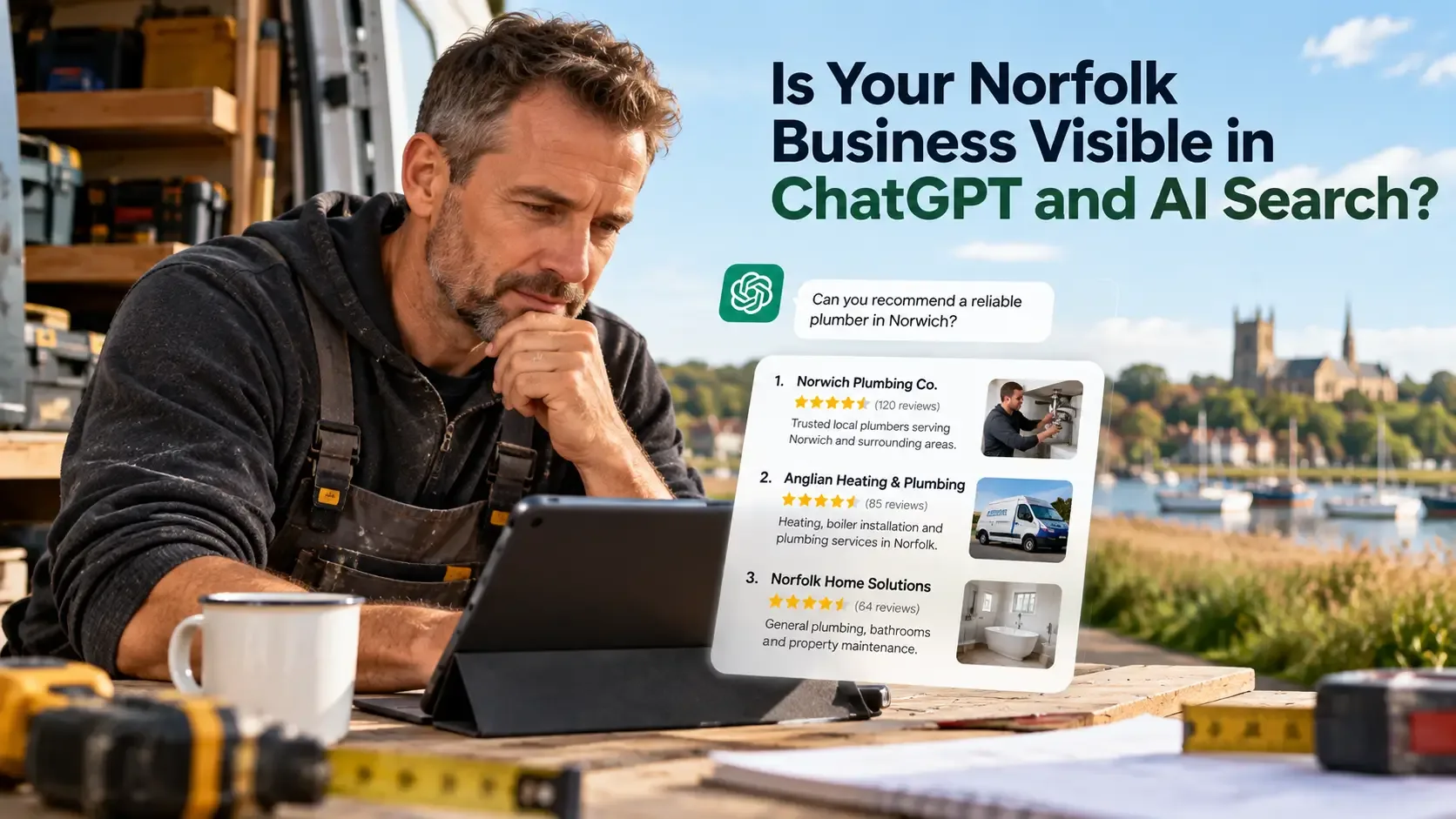
The way people find businesses online is changing.For years, Google has been the starting point for customers searching…